Showing posts with label HISTORY. Show all posts

Wednesday

THE STORY OF THE IGBO SLAVES

Long time ago, in the Month of May 1803 75 igbo slaves from the eastern part of Nigeria were captured by the British, remember that the major means of transportation back then was water, so the captors of the Igbo slaves were sailing back to sell the slaves to their masters, the 75 Igbo slaves were chained inside the ship half way into the journey the slaves revolted and took control of the ship, the 75 slaves grounded the ship Dunbar Creek, St Simon island, Glynn Country Georgia.


Instead of submitting to slavery they drowned their captors and started marching in to the water holding hands and singing a native igbo song, while drowning their selves. Igbos landing.
This historical moment is called the "Igbo landing " and it will be forever remembered as the first freedom match in the history of America. Leave a comment below, like and share with any igbo person you know. Thank you for reading.***prbxselfnetwork***

Sunday

HAVE YOU EVER HEARD OF THE TEMPLE OF PYTHONS IN BENIN?

Over the years Africa has always been a place for tourists, the love for snakes is rarely found in people, a lot of people despise the view of snakes especially when it comes to pythons. Pythons are constrictors, they strangle their preys to death,before swallowing.

In this article I'll be sharing with you photos of the inside of a tourist sites in Benin republic that is called the Temple of pythons, believe me, not everyone of you would like to visit this tourist sites. Before I proceed in showing you the photos of how the Temple of pythons look like,let us take a few journey about the origination and the contents of the temple. The History of Quidah Where the Temple of Pythons is Located This historical sites is located in Benin Republic in the town of Quidah
. The temple is facing the Ouidah’s basilica and the adoration of pythons started after a war that took place in 1717 . Not only is the Temple of pythons a place for tourist,but the indigenes of the town of Quidah also worships the pythons. Legend has it that ,the origination of the Temple of Pythons started after pythons saved the king of Quidah from being captured by the Ghezo soldiers,who were seeking to kill the king. Then in appreciation for the kind gestures, the king of Quidah decided to build a hut to protect the pythons. It is believed that the pythons are not harmful, anyone who kills them would encounter bad luck. Every 7 years the people of Quidah holds a ceremony to celebrate the value and symbolism of pythons in the Temple. At the entrance of the temple, their is a guild that would take you around the temple huts, but that is after you must have paid the entrance fee of $3. Their are other significant hut tourist cannot enter if they are not initiated. 
Not to forget the existence of a sacred forest I the temple,where voodoo initiation rites take place, in the sacred forest, shrines and status are seeing. During the initiation rights the temple is not opened to the public.***prbxselfnetwork***

Tuesday

HISTORY WILL NEVER BE IN A HURRY TO FORGET ANINI AND DERICO


Nigeria has had more than its fair share of violent criminal kingpins, many of whom even sit in the country's hallowed chambers as respectable gentlemen but few, if any, can juggle the people's memory from the past, here are the two most dreadful criminals to have unleashed terror on Nigerians.

1) Anini: Anini whose full name is Lawrence Nomayabon Anini can never be forgotten as one of Nigeria's most notorious armed robber who reigned supreme in old Bendel State, now Edo and Delta. Anini was a driver before he took to crime and quickly became a much feared gag leader whose approach got people trembling. Anini was supplied fire arms and covered by a senior inspector then George Iyamu. In one of his operations, his team stole N2000 from First Bank , Sabongida-Ora on August 1986. Can you imagine the value rate of N2000 then? 90 kobo was equivalent to 1 dollar. Anini's terror was high that Head of State, Gen. Babangida got worried over the activities of the evil gang. Anini was later arrested in December 3, 1986 by the police and was executed on March 29, 1987 after the amputation of one of his legs. 2) Derico Nwamama: Derico whose real name is Okwudili Ndiwe was only 22-year old when he started unleashing terror on the people of Anambra. Derico was a ruthless armed robber and was the gang leader at such a young age. Derico was not just a night to night robber as he also attacks during the day. It was recorded that Derico once rob the most secured banks and would often boast of his invincibility, that no man could kill him. It was recorded that over 100 people including police were killed in various attacks.
Derico was caught by a group of vigilante known as Bakassi. The police ordered for the release of Derico but it went on deaf ears as the vigilante went on to behead Derico after he made full confession, also mentioning his sponsors. Derico was killed on the 3rd of July 2001.***prbxselfnetwork***

Monday

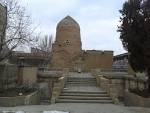
JEWISH HOLY SITE OF ESTHER AND MODECHIA IS DESECRATED IN ARSON


A holy Jewish Site in Hamadan Province in Iran has been set ablaze, according to the director of the Anti-Defamation League (ADL).

The tomb of Esther & Mordechai is believed by some to house the remains of biblical Queen Esther and her cousin Mordechai. It is reportedly the most important pilgrimage site for Jews in Iran. 'Disturbing reports from Iran that the tomb of Esther & Mordechai, a holy Jewish site, was set afire overnight,' ADL director Jonathan Greenblatt tweeted on Friday. 'We hope that the the authorities bring the perpetrators of this antisemitic act to justice & commit to protecting the holy sites of all religious minorities in Iran.' Greenblatt did not cite the source of the report, but other organisations have since claimed to have confirmed the attack, which a twitter exchange suggests could have been premeditated. The Simon Weisenthal Center, a human rights organization, said that Iranian activists had confirmed the attack to have occurred on May 14, the 72nd anniversary of when the state of Israel was founded. It is unclear whether the attack was related to the anniversary. The Tomb of Esther and Mordechai is located in Hamadan, Iran is believed by some to house the remains of the biblical Queen Esther and her cousin Mordechai. Reports say that it was set on fire on May 14 A tweet threatening to burn the holy site down was sent in response to another tweet from Israel's Foreign Affairs' Farsi twitter (pictured) Earlier on May 14, a twitter user by the name of Mohammad Mahdi Akhyar threatened to destroy the holy site, in response to a Tweet by Israel's Foreign Affairs' Farsi Twitter page. Roughly translated, Akhyar threatened if the twitter page continued to post, 'the fire brigade will be at the disposal of Hamedan, the tomb of your stories.' The initial tweet from Israel's Foreign Affairs' Farsi twitter account, that Akhyar was responding to, said that 'The regime of the Islamic Republic is deadly in the air, on land and at sea, even more so than Corona.' A number of top-U.S. jewish groups joined the ADL in strongly denouncing the reported arson attack, including the Conference of Presidents of Major American Jewish Organizations and the Simon Wiesenthal Center. Elan Carr, US Envoy to Monitor and Combat Anti-Semitism, strongly condemned the alleged attack, saying: ''Iran's regime is the world's chief state sponsor of antisemitism.' 'We strongly condemn the attack on the Tomb of Esther & Mordechai in Hamedan Iran, which follows a threat last Feb. against the site,' he wrote on Twitter. 'Iran's regime is the world's chief state sponsor of Antisemitism. It must stop incitement and protect its Jewish community and other minorities.' ***prbxselfnetwork***

DID NIGERIA EVER PLAY AGAINST INDIA AND LOSE 99-1?THIS IS WHAT HAPPENED---

This is one of the oldest lies (or should I say myth that I know of) and am sure almost every Nigerian born in the 1990s can relate to this. Most, if not all of us have heard of the story that goes thus: During a particular world cup edition, the 1990 World Cup, as it is in some cases.

Nigeria was pitted against India and India was leading Nigeria by 99 goals. Nigeria’s goal, the Indian players by use of some magic, (maybe black or white, I don’t know) always change the ball into some form of hideous creature which makes the Nigerian players run away from the ball. This had apparently been going on throughout the game. Five minutes to the end of the match, the Indian players sought to give Nigerian players respite and said if Nigeria could score a single goal, they would concede defeat and accept Nigerians as the winner of the game.
Well, the Nigerian players agreed to this and the match went on. Samuel Okwaraji, being a very patriotic Nigerian player, got the ball from an Indian Player, managed to dribble his way to the Indian team’s 18 Box, and just when he was about to kick the ball, It turned into a very big stone which would weigh thousands of tonnes. But Samuel Okwaraji kicked the ball with every ounce of energy he had in his body, despite knowing he could die but he sought to sacrifice his life so Nigeria can win the match. The ball soared, or should I say rolled into the net, which was a goal and according to the agreement between Indian and Nigerian Players, Nigeria wins the match. But Samuel Okwaraji was never to kick another football again because, well. He died after he kicked the ball. This led to the world governing body, FIFA banning India from active football for a hundred years. Really? If that isn’t the most absurdly, a bagful of lies, tall-tale story has ever heard. The whole nine yards is false. I don’t think Nigerian has ever been pitted against India in any soccer game, and even if they had, it’s not a game of magic vs soccer, I mean come on Nigerians, we also have our own magic, especially the dark one, at least that’s what Nollywood movies portrays most of the time. Come to think of it, there is no way, all that stuff we were told about is going to be happening on a soccer pitch and thousands will be watching it, not to talk of the soccer officials. So how did Samuel Okwaraji really Die? Here it is: Samuel Okwaraji lost his life while playing against Angola in the 1990 World Cup Qualifier. Ten minutes to the end of the game, Samuel Okwaraji fell down on the pitch and immediate first aid treatment could not revive him, so, he was rushed to the nearest hospital where he was pronounced dead. Samuel Okwaraji died from and I quote “congestive heart failure.” he didn’t kick a ball which had turned into stone which would weigh thousands of tonnes and damn impossible to kick. As to India, India is not banned in Active football, India hasn’t just qualified for the World Cup competition in a long time, well except since 1950, in which India was able to qualify for the world cup due to withdrawal of other teams but declined to attend, one rumor being that they declined because FIFA wouldn’t allow Indian Players to play barefoot, well that might be true but the truth behind the matter as an associate editor of the journal Soccer and Society of India, put it: “A careful study reveals that beneath the apparent financial difficulties given as the cause of withdrawal lay the A.I.F.F.'s unusual failure to appreciate the importance of participating in the Cup, despite assurances from the organizing committee to bear a major part of the tour expenses.” To India’s A.I.F.F. in 1950, the Olympic mattered to them more than the World Cup which was not seriously taken into account. India has a National Soccer Team, you can check it out on Wikipedia. India may not be good at Soccer but they aren’t stupid when it comes to Cricket. So as to India being banned from Football for a Hundred Years, that’s just another lie, and India using Black Magic against Nigeria in some Phantom Match which was never officially or unofficially played, that also is a lie. ***prbxselfnetwork***

Thursday

The good old days of igbo tradition

The Igbo are a conglomerate of decentralised city-states that never had a central monarch, spawning the popular saying “igbo enwero eze”; the Igbos have no King. The Igbo system of ruling involved a democratic and egaliterian council of elders with no leader-everyone’s opinions were relevant and weighed until a consensus was reached.

Monarchs were imposed on us by the coming of the British, who rightly surmised that taking over the region would be easier with central power figures.
That being said, traditions differ from one region to the other, but there are some Igbo traditions that are central to the entire region. Traditions, while they may not be relevant anymore in this age, are what make us a people.
Some of them are brow-raising, but some are beautiful and have endured through the ages. 1. Ladies were decorated with dye called ‘Uli’ and ‘Uhie’ (both were from trees) beautiful body painting /art to attract attention and suitors. The Uli could also depict that they are from a wealthy family and tell stories about their lineage. 2. A grandma or mother who wanted to match-make her grown daughter or grand-daughter would send her on errand to the man’s family with a pot of water on her head filled to the brim so that water would pour on her body revealing her figure to the intended man. The original wet t-shirt contest. Girls and boys couldn’t have sex before marriage, but they had a test for impotence too. The girl, who would be running errands for her future in-laws, would be tasked with taking bathing water to the man in the bathroom-under her mother-in-law’s watchful eyes. This was her opportunity to get a glimpse of the groom’s “manhood” and his response to her would tell her if he could rise to the occassion after marriage. Pretty interesting times, huh? 3. Wearing a mini skirt was nothing new to the Igbo community as young ladies in the olden days usually dressed in one piece cloth tied on the waist of an unmarried virgin, her chest bare with beads and iron bands around her neck and waist. This was not seen as indecent. A married woman would wear a one piece cloth from her chest to her ankles as an announcement of her new status. 4. A barren women could marry a ‘wife,’ woman-to-woman Marriage (Nwunye-Nwanyi).
The younger woman lived in the older woman’s house as a maid and not as a second wife to her husband. The woman could then permit her ‘wife,’ to sleep with her husband and have children on her behalf. All the children she had belonged to her madam. She practically had no rights in the family. 5. A woman without a male child could arrange for her daughter to have an out-of-wedlock child hoping it could be a male child (this was not very popular). The child was then adopted as part of the family, with full rights of a male son. Outsiders might think the daughter had an unwanted pregnancy while behind the scene her parents (usually her mother) encouraged her to have a son in the family before getting married. However, this usually resulted in problems when the boy became a man and called names by peers. 6. Young girls were kept pure before marriage by keeping young men away. Young men who could not wait till marriage to have intimacy kept young widows as mistresses called ‘Iko’. They could father children for the widows. However, any child born by a widow in her dead husband’s house belonged to her husband’s family. 7. The olden Igbo society really never held men responsible for adultery, married men easily kept mistresses, while married women were not permitted to keep or sleep outside their marriage. Men were also encouraged to have multiple wives, because this resulted in more children to work on the farm and it was a declaration of his social status too. 8. Marriage was a covenant between two families, not between two people. Marriage ceremonies were organized in stages. Stage one Ihe Ajuju (The Asking) – the man and his relatives went to the girl’s family to ask for her hand in marriage. Usually at this stage most discussions happened in parables ‘Ilu’ such that the bride-to-be might not even understand the intent of the visitors. Stage 2. Ekwelam (Response). The equivalence of the western engagement ceremonies. Final Stage 3: The wedding proper which many people refer to as ‘traditional wedding’ today. It’s known by various names ‘Ibu Mmanya’, ‘Igba Nkwu’, ‘Alughum’, etc. The bride price ‘Ihe Ego’ and gifts were presented to the bride’s family with fanfare and entertainment. 9. Generally, Africans including Igbos had many children in the olden days for three reasons. 1- Before vaccinations came to Africa, families lost kids to diseases. Therefore, having many kids was a way to safeguard losses in case some died prematurely. 2- Most activities such as farming were labor-intensive. Therefore, having more kids provided additional helping hands to a family. 3- Families and communities relied on male children as soldiers to defend their land and women from invaders. Every man was considered a soldier. There were no standing armies. 10. Masquerades called ‘Mmanwu’ were the local police that enforced law and order. They were usually young men of age who were initiated to swear oaths of secrecy never to revel who wore the masks. Wearing masks gave masquerades the courage to confront deviants without retribution. Masquerades also through entertaining songs/music acted as social critics and singing about ills in the society s and could revel secret deeds / abomination going on in the land. 11. Any child born to an Igbo woman anywhere, has a right in Igbo land ‘Nwa Diala’ (full-fledged son of the land), and they could be titled or crowned a community head, ’Eze’ or ’Igwe.’ Children bear their father’s names, but they belong to their mother-no matter where their father is from. 12. First daughters, called ‘Ada’ are very respected in the family and community. Families protected and respected their first daughter more than any other child in the family. In fact, in most communities first daughters operated like a cult called ‘Umu Ada’. 13. The first son inherits his father’s main house, ‘Obi.’ In a polygamous society the first son is not the son of the first wife, but the first child born into the family. ***prbxselfnetwork***

Sunday

ORIGIN OF BOKO HARAM IN NIGERIA


The term "Boko Haram" comes from the Hausa word boko meaning "Animist, western or otherwise non-Islamic education" and the Arabic word haram figuratively meaning "sin" Ideology Boko Haram opposes not only Western education, but Western culture and modern science as well. In a 2009 BBC interview, Yusuf stated that the belief that the world is a sphere is contrary to Islam and should be rejected, along with Darwinism and the theory that rain comes from water evaporated by the sun. History The group was founded in 2002 in Maiduguri by Ustaz Mohammed Yusuf. In 2004 it moved to Kanamma, Yobe State, where it set up a base called "Afghanistan", used to attack nearby police outposts, killing police officers. Yusuf is hostile to democracy and the secular education system, vowing that "this war that is yet to start would continue for long" if the political and educational system was not changed. In Bauchi the group was reported as refusing to mix with local people. The group includes members who come from neighbouring Chad and speak only in Arabic. Clash with the state In July 2009 the Nigerian police started investigating the group, following reports that the group was arming itself. Several leaders were arrested in Bauchi, sparking deadly clashes with Nigerian security forces which led to the deaths of an estimated 700 people. Attacks Prior to the clashes, many Muslim leaders and at least one military official had warned the authorities about Boko Haram. Those warnings were reportedly ignored. Bauchi Bauchi (Nigeria) In the state of Yobe, fighters reportedly "used fuel-laden motorcycles" and "bows with poison arrows" to attack a police station. On 30 July, allegations were made that Yusuf himself was killed by Nigerian security forces after being taken into custody. In January 2010, the group struck again in the Nigerian state of Borno, killing four people in Dala Alemderi ward in Maiduguri metropolis. On September 7, 2010, Boko Haram freed over 700 inmates from a prison in Bauchi State. In December 2010, Boko Haram were blamed for a market bombing, following which 92 of its members were arrested by police. On Friday January 28, 2011, a gubernatorial candidate was assassinated, along with his brother and four police officers. On March 29, police “thwarted a plot to bomb an [] election rally” in Maiduguri, Borno State. The threat was blamed on Boko Haram. On April 1 (the day before the original date of Nigeria’s legislative elections), suspected Boko Haram members attacked a police station in Bauchi (map). On April 9, a polling center in Maiduguri was bombed. On April 15, the Maiduguri office of the Independent National Electoral Commission was bombed, and several people were shot in a separate incident on the same day. Authorities suspected Boko Haram. On April 20, Boko Haram killed a Muslim cleric and ambushed several police officers in Maiduguri. On April 22, Boko Haram freed 14 prisoners during a jailbreak in Yola, Adamawa State (map) On Tuesday February 8, 2011, Boko Haram gave conditions for peace. The radicals demanded that the Borno State Governor, Senator Ali Modu Sheriff, should step down from office with immediate effect and also allow members to reclaim their mosque in Maiduguri, the capital of Borno State. On 9th May 2011 Boko Haram rejected an offer for amnesty made by the governor-elect of Borno state, Kashim Shettima Boko Haram was blamed for a series of bombings in northern Nigeria on May 29, 2011 that left 15 dead. On June 17, 2011 the group claimed responsibility for a bombing attack on the police force headquarters in Abuja that occurred the previous day. Officials believed that the attack was the first suicide bombing in Nigeria's >***prbxselfnetwork***

Featured post

Becoming a SOFTWARE ENGINEER

As technology evolves and becomes a bigger part of everyday life, so too does the need for technology professionals. Software engineers desi...